Skip to content

Free kittens, author thereof…

Sweet Little Open Source KittyI’ve had several emails/IMs today asking me if I’m the origin of the phrase “free as in free kittens” (with respect to open source software). Apparently it came up in a talk today and several people wanted to defend my honor (good luck with that).

The origin of the phrase is actually Eric Lease Morgan… I don’t recall hearing him use that expression, but I heard Marshall Breeding use it, and asked him, and he sent me to Eric, who was far too gallant or at least did not seem all that interested in protecting his property rights for this expression (perhaps Eric has a life?).

I may be better known for saying it (“unknown but sage?” ok, I prefer that to “well-known idiot”), and I aver I am the author of  “free beer versus free kittens” (as in, “for most of us, Firefox is ‘free beer'”). But give Eric (a quieter kind of guy) the nod for the coinage.

Recommended usage for presentations is to select the smarmiest cat image or photo you can find — extra points for big eyes or cutesy poses, the kind of pictures you’d find in dreary government offices, usually festooned with tag lines such as “God don’t make no mistakes” or “Is it Friday yet?”

8 Random Things Meme

I’ve been tagged several times for this meme, but had to set it aside while I met some writing deadlines. I am amused by the misleading subject; after all, eight truly random things about anyone would either bore or horrify you (or likely, both). So my “random things” are really eight things I’d like to share with you, carefully trawled from my life’s lagoons.

  1. I’m available for hire!
  1. When I was very young (and a precocious reader, like most of you), I read The Last of the Mohicans and thought there was something wrong with me because I didn’t like it. Then I read James Thurber’s critique of James Fenimore Cooper. That was my first critical-reading “ah hah.”
  1. I go for salt over sugar most times, and I’m ecumenical—junk food as well as haute cuisine—but cheese and fish make me wild with joy, and I adore oysters, raw and cooked. If I knew the nuclear missiles were headed to Tallahassee, I’d run out for blue cheese (especially Point Reyes), salt-and-vinegar potato chips, Tater Tots, sharp crumbly cheddar, Nathan’s hot dog nuggets, brie with tart, dense sourdough French bread, smoked oysters, fresh oysters, deep-fried oysters, barbecued oysters, oyster stew, and oysters Rockefeller; and if I still had room before the mushroom cloud rose over the capitol, I’d tamp it all down with as much good caviar and Nova as I could afford, washed down by crisp, mouth-tingling capers by the spoonful.
  1. I am bad at languages and even after two years of college German and two years of living in Germany I had trouble with basic living functions, such as reading my bank statement. I didn’t know this was not uncommon until I read E.B. White.
  1. I was a Camp Fire Girl for several years. My mother still has my Bluebird vest with all the beads on it. I was a terrible sissy, though my troop leader, Mrs. Derrick, protected me from being tortured by the more sophisticated girls.
  1. I accidentally ended up in a riot at San Francisco City Hall in 1979, the night of Dan White’s verdict. My friend David got us out safely, but he was later beaten by the police in front of the Elephant Walk bar in the Castro. I put that story in my essay, “David, just as he was,” which will be published in the next issue of White Crane.
  1. Until last year, I thought “synecdoche” was pronounced “cynic-douche.” (I still have trouble with “ancillary,” which my brain is convinced should follow the same beat as “artillery.”)
  1. I love getting tagged for memes, and in general love invitations, even to functions I can’t attend.

Tag, you’re it!

NASIG 2007 Presentation: State of Emergency

By popular demand (um… all two of you), here’s the talk I gave at NASIG 2007, uploaded to slideshare.net so I could, you know, easily share it! Bon appetit.

Free Range Librarian for Rent

Note: you can email or IM me at kgs@freerangelibrarian.com, Twitter me at kgs, or poke me on Facebook.

I’m job-hunting — with the awareness that my family life is here in Tallahassee — but I am also hanging out my shingle for short-term contract work.

My availability

In April I resigned from a job I held briefly that was not a good fit. Since then I’ve been freelancing (writing and presenting), working on my creative writing, and applying to several local positions.

I’m feeling rejuvenated, even perky, and am broadening my search.

I’m committed to staying in Tallahassee for the next few years, where my partner has a great job (though work-related travel, distance work, or creatively blended commuting opportunities are all good options). I also have some interesting job prospects I’m pursuing that I feel optimistic about, but if they happen, nonetheless won’t happen overnight. So this is a bifold approach: basically, I’m for hire.

My background and skill sets

Naturally, I have a c.v.; this is just the executive summary. I’ve worked in nearly every type library in both management and technical positions, and before that served for eight years in the Air Force. My last significant job ended last fall when we moved to Florida: five years as the manager of Librarians’ Internet Index, a great gig that in addition to the joy of working with an A-Team of virtual librarians gave me all kinds of project management skills and buffed up my supervision, management, reporting, and grant-writing. It was a job that was a great match for my flexibility, technical acumen, entrepreneurial spirit, love of writing, and creativity.

I write, I teach (LIS, at two institutions, on-site and distance), I’m a skilled presenter, I am a good planner, and I work well with others. I like deadlines, I know what a deliverable is, I’ve got broad (if not always deep) knowledge of most library operations, I have a very broad understanding of library technology, and I’m personable.

Long-term jobs: don’t let the location put you off

I have a lot of flexibility in my life, I’m an excellent distance worker, I live fifteen minutes from an airport, and I travel well. So drop me a line if you know of a job that doesn’t require someone on site every day (or could be adapted for a distance worker). Note that while I work well “face to face,” I interact with remote workers better than most people in my age group or with my level of management experience.

Short-notice summer teaching and presenting assignments

Stuff happens; illness and injury don’t honor the school calendar. If you know (or later learn of) of an LIS program that needs a substitute instructor for all or part of a class this summer, please contact me immediately. I can teach remotely or fly to your institution and pick up the reins.

The same goes for English composition, with the caveat that I’ve never taught — or taken — a comp class, so we’d all be in for a merry ride. Still, if your comp instructor just ran off to join the circus or fell and broke her wrists (n.b.: the latter scenario is my excuse for not doing step aerobics), hand me a syllabus and let’s talk it over.

(I could also step in to a nonfiction literature class in a writing program, but I’m not counting on that at all.)

That goes for filling in for a program presenter who suddenly can’t make it to your presentation: ask me. If it’s local, I can jump in a car. If it’s far away, I’ll fly. I’ll get there.

Teaching, longer-term

If you’re reading this wishing you could offer an LIS class this fall on that-topic-you-don’t-have-an-adjunct-for, talk to me.

I debated whether to seek LIS teaching assignments for the fall, in case full-time work with benefits opened up. I have decided if adjunct teaching opportunities became available, I would take them and then advise possible future employers that these teaching assignments are part of the commitments I made when I was freelancing, and a deal’s a deal.

I’m still trying to decide if there’s room in any LIS programs for a full, 3-credit course about writing for librarians, but if you think there is, I agree with you, and let’s have me teach it.

(Of course, I’d love to teach creative writing, but so would a few thousand other MFA grads. Then again, if you want me to guest-lecture on “Research for Writers” – a topic often underlooked by writing programs — make an offer, any offer, even a cover-my-mileage or here’s-a-hot-dog-and-a-thank-you offer; I’d love to get my foot in the door on this topic. Might also make a killer AWP panel … Laura?)

Possible presentation topics

So you’re thinking, you have this staff development day coming up and you’d like to invite me, but you don’t know what to ask me to do.

Just for starters, think about these topics:

  • 2.0 for Everyone: getting started with social software
  • Death to Jargon: How to spiff up your library’s written communications
  • LOCKSS in a Box: Building a pain-free, low-cost digital preservation network for your library and your community
  • We Have a Blog, Now What? Building buy-in, content, and market for your library’s blog

Or pitch me an idea! Why not a half- or all-day writing workshop for your library staff — not a talk but a hands-on jazz-up-that-prose class? Or an online workshop on the same topic?

Writing and Revision

In addition to old-fashioned article-writing (and thank you to my writer friends who sent me work before I even put out a call — I appreciate the opportunities and am enjoying the diversity of the topics!), allow me to put my skills to work for you by (for example):

  • Creating or editing copy for your library, organization, or company blog
  • Revising or creating content for your library, organization, or company website
  • Review, analysis, and suggested revisions for policies, procedures, job descriptions
  • Review, analysis, and suggested actions and revisions for grants

In Sum…

Short- or long-term, I’m a good investment. I’ve been in the full-time workforce for thirty years (yes, since I was two years old — o.k, o.k., since I was nineteen), and bring skills, humor, perspective, and joie de vivre to everything I do (except perhaps housework… no, definitely not housework). I am a happy camper and a team player who enjoys a good day’s work done well.

Whether you are interested in hiring me for a two-hour presentation or for the next seven years, I’m open for discussion, so drop me a line. I’ll also be at the ALA annual conference in D.C.

Thanks also if you can spread the word.

Tallahassee Event: An Evening of Drama with Drew Willard

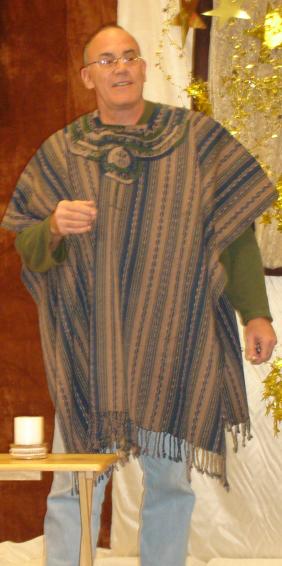
On Monday, June 11, at 7 p.m., the United Church in Tallahassee will host an evening of Biblical storytelling with the Rev. Drew Willard. There will be a spaghetti dinner before the event. Tickets are $5. This is a fundraiser for the United Church in Tallahassee Youth Group, which is raising money for the 2008 National Youth Event. Contact UCT at 850-878-7385 for more information or email Rev. Dr. Sandy Hulse.

Drew Willard, Storyteller

Drew Willard has told a variety of Biblical stories since 1987 while attending Lancaster Theological Seminary in Lancaster, PA. A member of the Network of Biblical Storytellers, he has presented workshops using the techniques he learned at NOBS’ “Festival Gatherings.” He has a bachelor’s degree from West Point (Class of 1977) , an M.Div. from Lancaster Theological Seminary, and was ordained in 1996 as a minister of the United Church of Christ. Rev Drew serves as a pastor for Holiday United Church of Christ in Holiday, FL where he tells the Gospel stories during worship.

NASIG Presentation


locksscat

Originally uploaded by freerangelibrarian

The talk went great at NASIG, and I even got an honorarium (which I initially didn’t think I would be getting, maybe because I routinely turn them down if I’m working for an institution, as I was when I accepted this talk). I didn’t get a thousand requests to upload the slides, so I might or might not, but this is a re-creation of a picture of “LOCKSS Cat” from a sequence on how to set up a LOCKSS network.

Nice to be home in my fluffy pink bathrobe, reading the New York Times. I’m liturgist at the early service today so I will come home afterwards and do some nice domestic paperwork until the Y opens at noon.

Presentation Alley


internets

Originally uploaded by griffey

I’m deep into the presentation zone today… but heard Bob Stein give a vision talk, had lunch with Greg Schwartz, and in two hours will get to hear Vicky Reich talk about LOCKSS and CLOCKSS, which is the kind of software that can help us reclaim the heartland of our profession.

Meanwhile, Jason Griffey’s stream of funny pictures lured me away for a few minutes… this being one of my favorites that is still work-safe.

On the road again…


Penguin

Originally uploaded by freerangelibrarian

Heading off to NASIG with a disheveled pile of notes to pull into Saturday’s keynote… but I’ve been reading The American Scholar instead of plowing through PowerPoint. Wendy Smith on her third reading of Dispatches in thirty years: “The book hasn’t changed, of course, but I have.” Sentences such as that one remind me that reading hard, and writing hard, is a large part of my personal joy. The slides… they will happen, they always do.

On the matter of the postal increases, I have heard back from incoming ALA President Loriene Roy, who has discussed the issue with ALA’s Executive Board. I’ll keep you posted if other officials I wrote communicate back with me.

On the matter of Sacramento Public Library’s staff disputes, I’d like to hear the rest of the story. As a former shop steward, I’m aware that the press can spin coverage of issues. Then again, unions can flub their spin, too; if the staff were advised that raising a ruckus over the purchase of popular materials was a good approach, they were told wrong, and someone needed to have a blog up and ready with the staff’s point of view. Then again — again — it could be that the campaign is exactly as we see it. As more than one sage has noted, there are at least two sides to any story, and the truth lies somewhere in the middle.

Librarything Goodies, Great post from Jenny

Jenny Levine has a great post (among many other recent great posts in this vein) about striking a balance with the online life… I write that thinking, I really should link to all those other posts, but I’ve been dogging it all day getting ready for NASIG and writing two pieces, and I’d really rather get to the Y and read The American Scholar.

Meanwhile, i have concluded that the WordPress book plugin I’m using is just not cutting it. It’s not you, plugin, it’s all my fault; I don’t read that way (planned, reading, finished). I suck up books haphazardly… last night I read a few pages from the Wonder Boys, I read some Munro stories and then returned the book to the library, and may or may not choke down some Susan Sontag.

So I’m experimenting with a LibraryThing tool, and if I like it I’ll add to my WordPress theme sidebar this weekend. Maybe I’m really lucky and someone widgetized it already… it’s flexible and fun. Shall I list the most recent books, or random? I also tagged the Librarything books I own, and will start adding liberry books I’ve actually read all or in part.

ALA: What is to be done?

[slightly revised and expanded from first post a few hours ago.] Everyone grumbles about ALA at some point or another. “The conference event planner sucks.” (Actually, the event planner hates me. This conference it stopped acknowledging me altogether.) “The conference is in the wrong location.” (Memo to ALA: Orlando is hot in late June, and at least for now, Philadelphia is cold in the winter.) “I asked ALA to do X and they were slow.” Ya think? Two months after joining ACRL, I finally got an email acknowledging the crisp green cash I had sent their way; they burbled that I was their newest member. Funny, because at that point they weren’t my newest association. [N.b. See follow-up post with excellent response from ACRL.]

But for most ALA members, ALA just is what it is. They attend conferences, or they don’t; they pay their dues and focus on other things (and good on them, too). The reality is that in an organization with 66,000+ members, most members aren’t concerned about some of the nuances we politicos fret over. So take all that into consideration in this discussion.

The membership roll is huge and conference attendance is bullish. By all accounts the American Library Association has never been healthier. Two conferences a year, a magazine every month, publications galore, and so many committees we are limited in the cities we can stay in because we need so many hotels with conference rooms.

If this were 1957, I’d say we were in for a good fifty-year run. But it’s 2007, and the question is, what kind of ALA do we want for the next fifty years? My suggestions below are just a beginning… but are based on years of discussions with other members.

What is impractical

In talking to members who are frustrated with ALA, I sometimes hear suggestions I believe to be impractical or even problematic, assuming we’re all agreed in the value of a single national association representing tens of thousands of librarians. Here are some of these suggestions:

Lower ALA dues. However, ALA dues are not high to begin with, compared to other similar organizations. I paid almost twice as much in one state association.

Let members join the divisions without joining ALA. That’s just a variation on the dues theme. It sounds fine until you learn that the reason you can belong to a national assocation for library technology professionals for $60 is that the association relies on the services supplied by the mother ship, ALA, from the building itself to IT, HR and training.

Charge less for conference registration. Again, for what we get (and who wouldn’t want the chance to go to Orlando in late June!), the registration fees are about as low as they can be.

“Make” Council stop taking useless positions. I hear this one a lot. I agree that there are positions Council takes that are less than useful. But some of those “social” positions (real or potential) are on behalf of librarianship. For example, I’d like to see ALA get forceful about libraries that do not offer domestic partnership benefits. The real issue is that Council has very little accountability overall because it meets essentially in secret, doing most of its work after the conference has ended. For an organization committed to sunshine, our own practices can be a little skeezy.

Let’s just build our own association, and we’ll be great… really great. ALA may be a ponderous, awkward behemoth, but any organization reflecting such a diverse profession will be a bit bulky. It’s the nature of organizations that size. If we built a 66,000-member association, it would look an awful lot like ALA. I think it’s more the case that we want to bend and flex ALA to make it less of a mid-1950s institution and more reflective of current practices in organizations and the world at large.

Realistic Areas for Change

Electronic participation. We do way too much work face-to-face (in a strange emulation of much library work, which is also pregnant with many, many meetings). Allow people to participate in formal decision-making electronically. If Executive Board can make decisions by phone call, then committees can vote by email. Set up policies and procedures for participating electronically with a heterogeneous set of tools; it’s possible to have better transparency with online meetings (how many meeting minutes read like Book-a-Minute classics?). Stop talking about it, stop having five-year plans, stop being so scared of the Luddites, and just fricking DO it.

The ghastly website. Hire people from outside and get it done right. If that means the IMIS system has to be rethought, do that as well. It’s not a huge association, so it’s odd that so much revolves around that funky old crap. In any event, the website design needs adult supervision with a measure of benevolent dictatorship thrown in to boot. Right now it’s a ghastly embarassment for a society of information professionals — ugly and hard to use. Changing the website design will mean changing ALA, because it is a product of ALA’s own structure, but that can be done.

Reduce ALA’s carbon footprint. This includes electronic participation, but also means things like committing ALA to paper-limited conferences, supporting electronic conferences, offering electronic membership meetings, giving preference to green activities, etc. Require joint conferences from divisions. Allow (encourage!) e-participation from panelists and speakers (as opposed to LITA’s agonized handwringing about how librarians will get “confused” if there’s a chat screen up while Top Tech Trendsters are talking).

Make ALA Council transparent, accountable, and ‘greener.” Put Council’s schedule on ALA’s schedule; force Council to begin its work before it meets in person; run council’s near-real-time live transcripts (which we all pay to produce for the hearing-challenged and broadcast on huge screens within the chambers during Council sessions) on the web in real-time. (The oft-cited excuse that the quality isn’t perfect fails on two counts: first, if it’s good enough for the hearing-challenged, it’s good enough for everyone else; second, thanks to television, we’re in a culture that is aware and tolerant of the tics and flubs of real-time close-captioning.) Enable e-participation from councilors who cannot attend all or part of the conference. Force ALA’s committees to do work prior to the conference, so that Council doesn’t have to wait until the day after the conference to begin its real work — a situation which contributes to Council’s lack of accountability.

Review ALA’s budget and financial strategy and tell the members what it all means. I’m not sure ALA is on the wrong road with its money, but it is a good time to clarify how it is earned and spent. People do not realize how much conferences and publications drive ALA revenue… and how little thinking goes into changing that structure.

Scale back the committee/member group structure, and strive for ZPG. Part of the conference cost is driven by how many meeting rooms ALA requires. Force committee accountability… no more registered rooms with one or two people showing up and drifting away. This means changing how people qualify coming to conference — many organizations look for participation (which explains quite a bit of the committee redundancy) — so this issue is hugely political.

Make conferences greener and more lithe. Create more ad-hoc, short-notice program slots for ALA conferences. Consider lifting the ban on “programs” at Midwinter, or consider holding virtual Midwinter conferences; in any event, think hard about an association that requires tens of thousands of people to fly cross-country for short meetings twice a year (in part because of the committee/meeting structure that is based on face-to-face communication for “real” work). It’s not that I don’t love to see my friends — to a great extent, conferences are about seeing my friends — but for an organization that has repeatedly committed at least on paper to the values of environmentalism (you really should read that Policy manual…), we sure do like our airplanes. (Library-related travel completely trashed my carbon footprint, when I measured it last year.)

Eliminate paper balloting for ALA elections. And shorten the voting period. No ALA member needs to be without email. We spend a lot of money, and waste paper, on a few “information will-nots.”

Rethink ALA Publishing. Right now it’s seriously balkanized, oldfashioned, and not producing revenue. All these divisions have publishing arms, none of them run well (because publishing is not their forte, and that’s not to fault them at all). Follow the money. Think about consolidating all publications, and think about how to e-publish.

How to effect change

The short answer is to take over ALA governance. (The other short answer is RTFM: log in, and read the ALA Handbook of Organization end-to-end. It’s not publicly available because ALA couldn’t figure out how to separate its email-based directory of VIPs from the other documents… which just baffles me; if I had a more current version of Adobe, I’d split the file myself. The Handbook includes the policy manual and other key documents.)

Council elects an Executive Board, which theoretically runs ALA, but delegates to the Executive Director of ALA, currently Keith Fiels (a good guy, but he also isn’t going to steer ALA anywhere EB isn’t taking it — and that’s correct behavior). Council nominates and elects EB. With a majority on Council, you theoretically have control of ALA (since you can elect the EB). There are just under 200 Councilors, so elect a slate of 100 Councilors and you have a majority. Yet it’s not that simple, either, because as the ALA website notes, “Council, the governing body of ALA [is] comprised of 183 members: 100 elected at large; 53 by chapters; 11 by divisions; 7 by roundtables; and 12 members of the Executive Board.” It’s not impossible that a slate couldn’t include chapter, divisional, or roundtable candidates, but it would require more effort, and since not all Councilors are elected at the same time, you can’t just run 100 at-large candidates. More likely than electing Councilors from chapters and divisions is first, to build a reform Council over several years, and second, that a strong Council EB slate would pick up additional votes outside the original reform slate.

But you want more than elect a Council: you want to change the bylaws, which were last significantly revised during the reform era of the early 1970s; you want to ensure the chapters and divisions are on board, because even with a majority vote, if they aren’t on board they will just stalemate you until your slate’s term is up; you want to seed key ALA committees with members who will be on board with the slate’s core values; and you want to grab the hearts and minds of the ALA membership, and ensure that the library press are on board with you.

Timeline

This short list only addresses changing EB, the Bylaws, and some committees.

Year 1: Run an ALA presidential candidate who will be the president during the “action year,” and run a slate of Councilors committed to the slate’s governance issues. Start probing and parsing key ALA committees, such as Organization, Committees, and Bylaws.

Year 2: run the member who will be the president-elect. Run another Council slate. Focus on having a clear majority on Council. Rewrite Bylaws and Policy as needed.

Year 3: run another president and another Council slate. Solidify presence, clean up Bylaws changes.

That’s it. It’s not forever, because nothing is forever. But if you want to change ALA — either for the reasons I suggested, or others — that’s the way to do it.